Why Immersive VR Is Becoming the Offshore Industry Standard
Immersive VR simulators deliver realistic, experience-based training for the offshore energy sector, enabling crews to master complex offshore operations without real-world risk.
By improving safety and reducing operational costs, they strengthen workforce readiness as offshore markets accelerate — from the Baltic Sea to APAC.
Why VR Is the New Standard
The offshore environment is demanding and unpredictable.
Extreme weather.
Heavy lifting.
Marine instability.
Precision coordination.
High-value assets.
Operational Simulation Without Real-World Risk
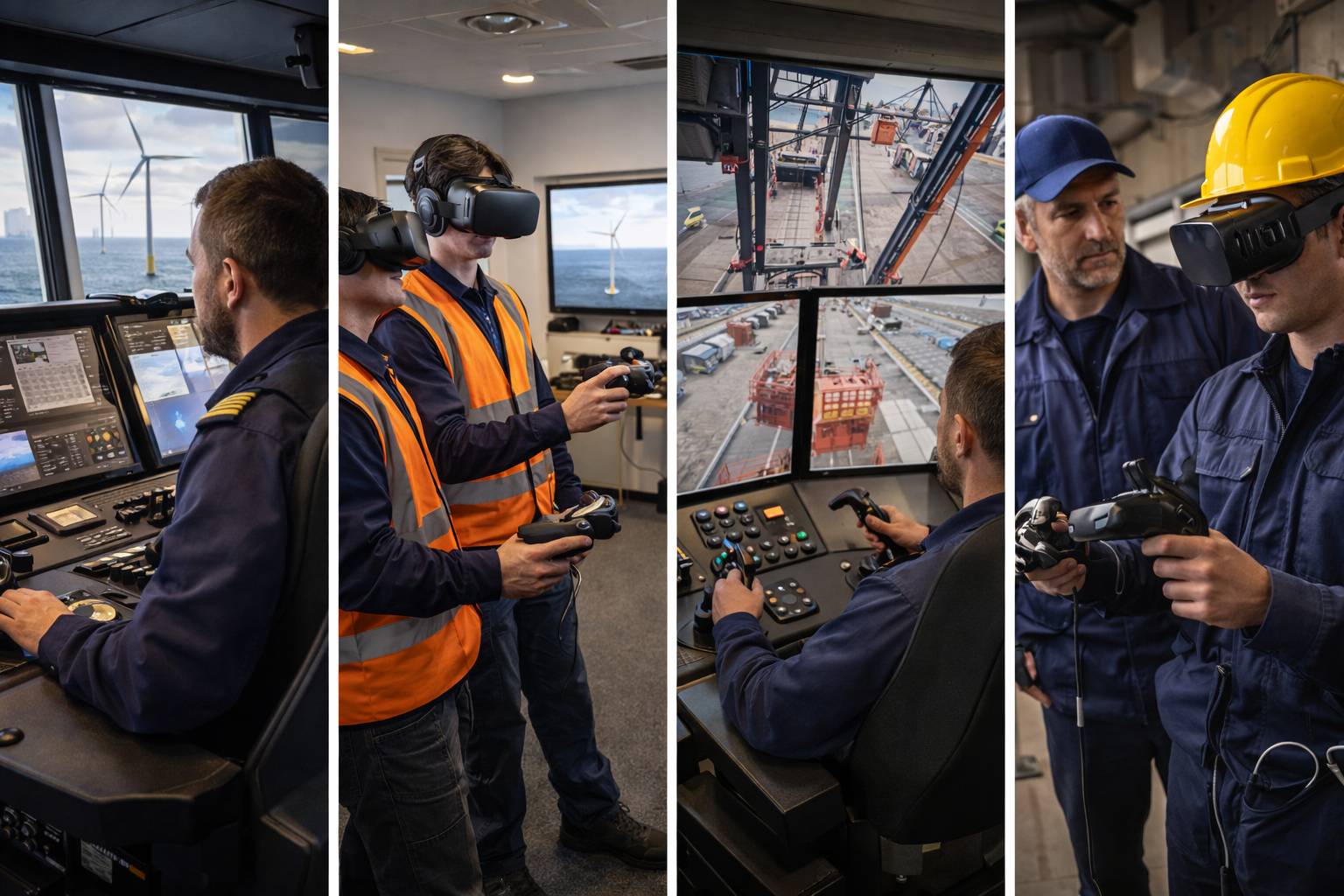
VR offshore wind training enables trainees to safely rehearse essential operational workflows, including:
Crew Transfer Vessel (CTV) operations: Mastering approach maneuvers and personnel transfer procedures.
Floating and deck crane handling: Managing heavy loads in dynamic marine conditions.
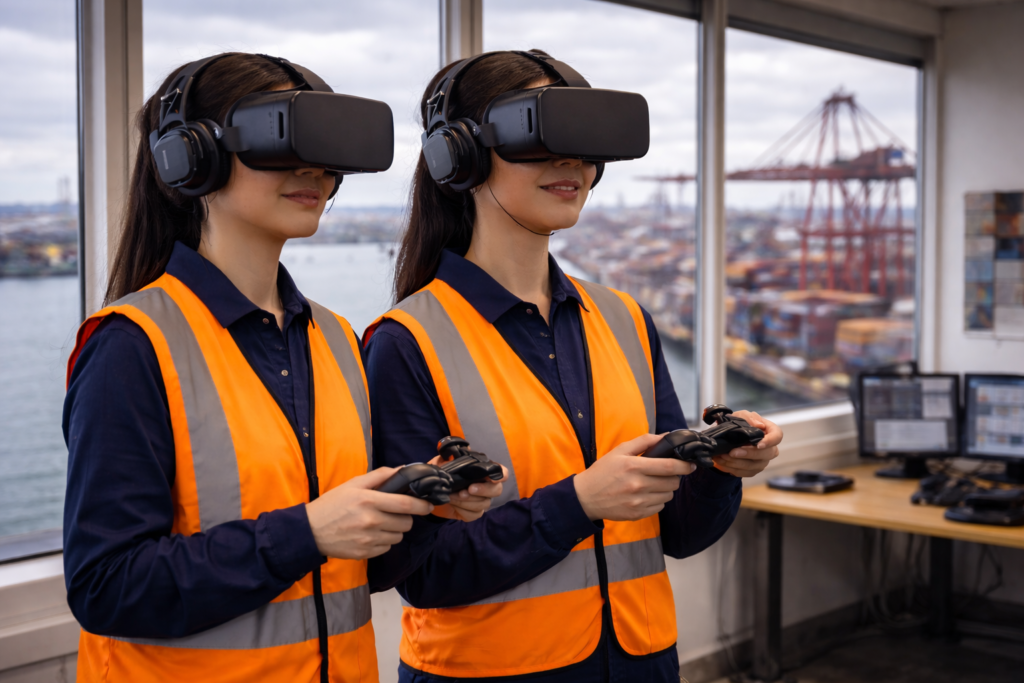
Port logistics: Replicating the real-world usage of port vehicles, machinery, and vessels.
Complex coordination: Precision lifting, positioning, and port-to-vessel communication.
Operators practice skills, timing, and teamwork before working on real offshore equipment.
Tasks can be repeated.
Performance can be reviewed.
Muscle memory can be built.
First-time offshore risk is greatly reduced.
Measurable Efficiency Gains
Research from PwC indicates that VR training is a game-changer for industrial readiness:
275% More Confident: Crucially for high-risk offshore environments, these learners report being significantly more confident in applying their skills in the field.
4x Faster: VR learners complete training up to four times faster than those in traditional classrooms.
Unreal Engine – Real-Time Industrial Simulation
Training environments are built using real-time 3D engines such as Unreal Engine, enabling:
We use cookies to ensure that we give you the best experience on our website. If you continue to use this site we will assume that you are happy with it.
You can revoke your consent any time using the Revoke consent button.